Core Team
EFEO
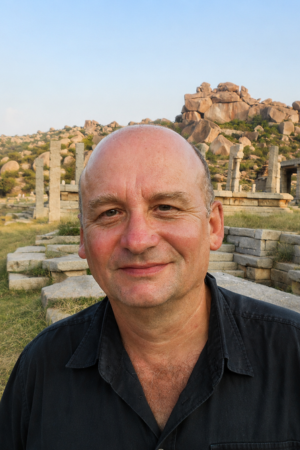
Xavier Guillot
Xavier Guillot is an architect, professor at the National School of Architecture of Marseille, and a researcher at the Project[s] research unit. His research initially focused on housing in the context of globalization: in Japan, Southeast Asia, and the Middle East. Today, his work addresses the evolution of design practices in rural settings. From 2009 to 2021, he headed the scientific and thematic network for architecture "Rural Space and Spatial Design" (ERPS), founded on his initiative and since renamed "Rural Perspectives" https://perspectives-rurales.archi.fr/. Within the ANR AltLife-SSEA project, which he coordinates, he is specifically in charge of issues related to WP2.
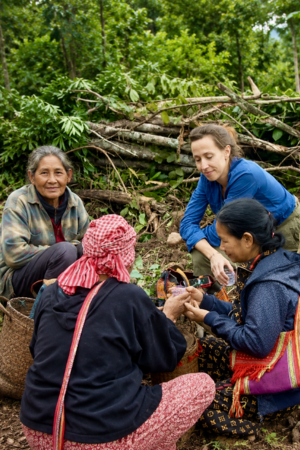
Catherine Scheer
Catherine Scheer is an anthropologist, senior lecturer at the French School of Asian Studies (EFEO) and co-director of the Centre Asie du Sud-Est (CASE). Her research involves indigenous peoples of the Cambodian highlands and explores how they deal with the conversion of their forests into industrial plantations. After having studied Christianisation dynamics and their often complex articulation with the fight for indigenous rights, she's currently exploring links between ritual and ethics. Co-in charge, with Maria Chauveau, of WP4, she will collaborate with the Bunong Indigenous People Association in Cambodia and the Asian School of Wisdom in Thailand.
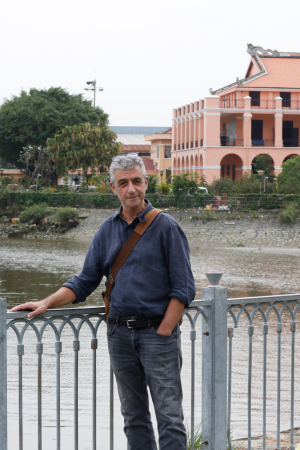
Olivier Tessier
Olivier Tessier, an anthropologist and agronomist, has been a lecturer at the École française d'Extrême-Orient (EFEO), based at the Hanoi center in Vietnam since 2006 and at the Ho Chi Minh City center since 2015. He is a member of the "Southeast Asia Center" (UMR 8170 EHESS/CNRS). His research focuses on the social and political management of agricultural water from a historical perspective, on the one hand, and on the movement to build citadels in Vietnam during the first half of the 19th century and their transformation/destruction during the colonial period, on the other. He edits a series of reference works on Vietnam published in Vietnamese and has been organizing a series of lecture-debates in Ho Chi Minh City since 2019. As part of the AltLife project, he conducts fieldwork in various locations focusing on the issue of the social management of water.
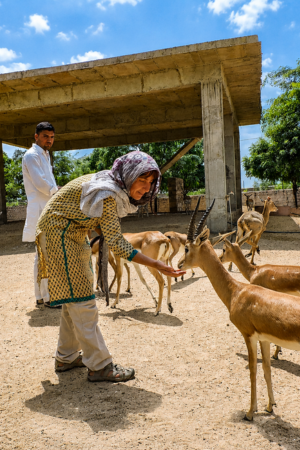
Maria Chauveau
Maria Chauveau, anthropologist, is a postdoctoral researcher on the AltLife-SSEA project and is affiliated with the EFEO. Her research focuses on the relationship between societies and their environment. Building on her PhD thesis dedicated to the Bishnoi of Rajasthan, she is studying the socio-environmental changes taking place in the Thar Desert region and their impacts on relations between humans and other-than-humans, in light of issues of identity, religion, economics and territory. As part of AltLife, she is deepening her research within the Bishnoi community whilst helping to coordinate the overall project led by Xavier Guillot. She is also co-leader, with Catherine Scheer, of Work Package 4, which deals with ontologies and (cosmo)political imaginaries.
IRASEC
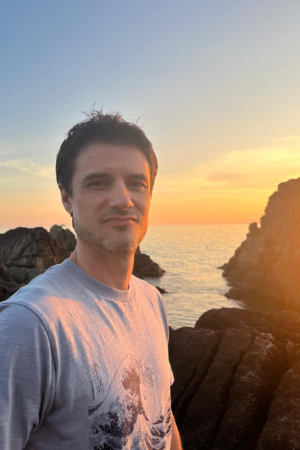
Gabriel Facal
Gabriel Facal is an anthropologist and currently serves as Deputy Director of the Research Institute on Contemporary Southeast Asia (IRASEC, Bangkok). His research examines the emergence and development of agroecology in insular Southeast Asia, drawing on case studies in Indonesia as well as comparative work conducted in collaboration with research teams based in several countries across the region, including Malaysia, the Philippines, and Thailand. He serves as co–PI of the CNRS International Research Network (IRN) programme RUPTuRS ("Rethinking Urban Planning and Transitions in a Context of Resource Scarcity: Indo-Pacific Cities within Planetary Boundaries"). In AltLife, he is co-in charge of WP3 and will collaborate with the Kanekes indigenous community and with the ecological Islamic school At-Thaariq in Indonesia.
IFP
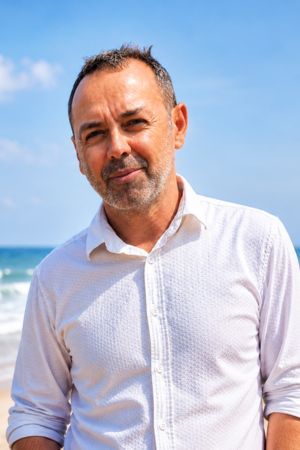
Samuel Corgne
Samuel Corgne is Professor of Geography at Rennes 2 University and a member of the LETG Research Unit (Littoral, Environment, Remote Sensing and Geomatics). Since 2024, he has served as Head of the Geomatics Department at the French Institute of Pondicherry (IFP), India. His research focuses on the use of satellite time series for monitoring agroecosystems, with particular emphasis on their interactions with the environment and human societies. He coordinates the EPHEMERE project, which investigates the phenology of a semi-arid tropical agroecosystem in southern India using satellite remote sensing. As part of the ANR AltLife project, he also contributes to the cartographic analysis and visualization of results obtained across the project's study sites.
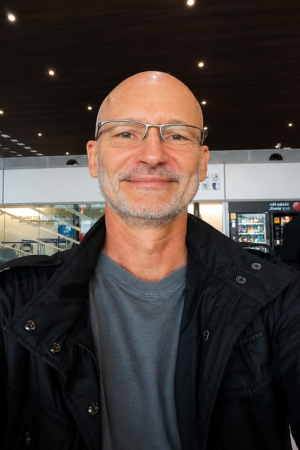
Frédéric Landy
Frédéric Landy is a professor of geography at Paris Nanterre University (LAVUE-Mosaïques) and a research associate at the Center for South Asian and Himalayan Studies (CESAH) and the French Institute in Pondicherry, which he directed from 2016 to 2020. As one of the coordinators of the Program Local Food System, his current research focuses on the relationships between agriculture, food, and the environment in South India, as well as between policymakers, consumers, and farmers. He also coordinates the ANR AgroEsthet agroesthet.org project on the aesthetics of agroecological landscapes in Tamil Nadu and Karnataka. As co-coordinator of WP2 for AltLife, most of his work focuses on Auroville.
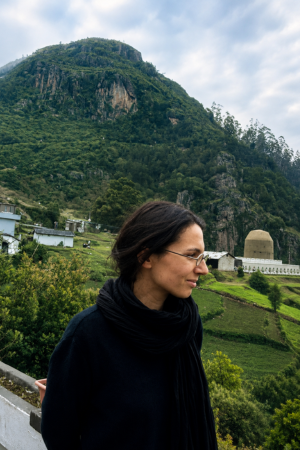
Delphine Thivet
Delphine Thivet is a sociologist and Associate Professor at the University of Bordeaux, where she is a researcher at the Centre Émile Durkheim (UMR 5116). She is also an associate researcher at the Centre de Sciences Humaines (CHS) in New Delhi and at the French Institute of Pondicherry, where she headed the Department of Social Sciences from 2021 to 2025. Her current research explores the socio-environmental transformations of agricultural worlds in France and India. She examines how ecological change in agriculture takes shape in everyday agricultural work, professional trajectories, collective forms of organisation, and public policy instruments. Within the project, she co-leads Work Package 3, "Analyzing Social and Institutional Transformations," with Gabriel Facal, with a particular focus on the Auroville case.
PASSAGES
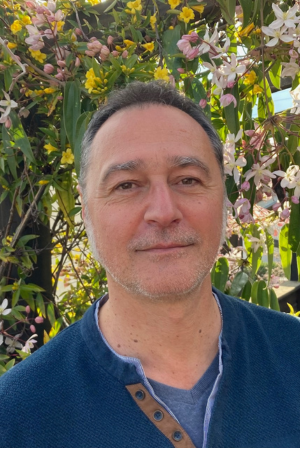
Jérôme Ballet
Jérôme Ballet is an economist at the University of Bordeaux and a researcher at UMR 5319 Passages. He is President of the Fund for Research in Economic Ethics and a Fellow of the Human Development and Capability Association. He was awarded the Ethics Teaching Award by the Ostad Elahi Foundation (2021). His current research focuses on the relationship between economics and ethics, particularly the role of emotions and attachment to nature. Within the AltLife project, he is affiliated with WP3, serving as a field researcher in Indonesia and Thailand.
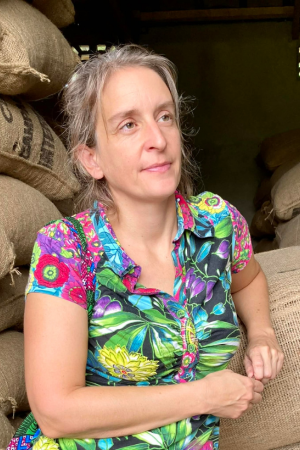
Aurélie Carimentrand
Aurélie Carimentrand is an associate professor of economics in the Social Careers Department at the IUT Bordeaux Montaigne and an associate researcher with the joint research units PASSAGES (Reconfiguration of Spatialities and Global Change) and INNOVATION (Innovation and Development in Agriculture and Food). A proponent of active and cooperative teaching methods, she mentors future socio-cultural facilitators in the fields of the social and solidarity economy, education for international solidarity, and, more broadly, socio-ecological transitions. As a visiting researcher within Altlife's WP3, she will contribute in particular to the analysis of economic and institutional reconfigurations within the Bishnoi (India) and Bunong (Cambodia) communities.
Artistic collaborators
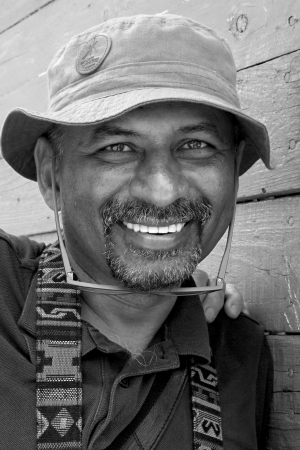
Ravi Agarwal
Ravi Agarwal is an interdisciplinary artist, photographer, environmental campaigner, writer, and curator whose work bridges art and community. His practice addresses the complex relationship between nature and culture, and its futures through photography, video, text, and installation. Ravi is also the founder of the environmental NGO Toxics Link and the Shyama Foundation, which supports initiatives at the intersection of art and ecology in India.
From 2026 to 2028, he will collaborate with the AltLife project in Bishnoi areas around Jodhpur, as well as with relevant community practices in Auroville, Pondicherry, India. He will carry out visual and multimedia documentation, leading towards the interactive map and the exhibition.
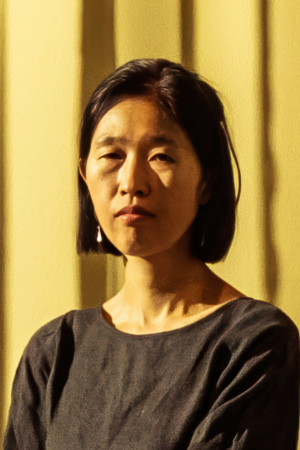
Som Supaparinya
Som Supaparinya was born, lives, and works in Chiang Mai, Thailand. She studied fine arts at Chiang Mai University and later pursued studies in media arts at Hochschule für Grafik und Buchkunst Leipzig in Germany. With a long-standing interest in nature, geography, and history, she observes and creates video art and documentaries in Thailand, Myanmar, Laos, Cambodia, New Zealand, Japan, and Vietnam www.atelierorange.info. Her interest is also linked to landscape changes resulting from large-scale infrastructure projects and the influence of war.
As part of the AltLife project's interactive map and exhibition, she is carrying out visual and multimedia documentation work with the Pun Pun and RTRC & ASW collectives in Thailand, as well as with the Bunong Indigenous People's Association in Cambodia.
Academic partners
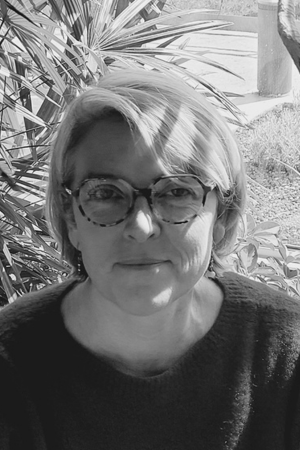
Caroline Abela
Caroline Abela is the head of GeoDock, a space dedicated to scientific documentation and outreach within the scientific dissemination division of the UMR Passages (Bordeaux Montaigne campus). As part of the Alt-Life project, she supports the team by coordinating, alongside Léa Menard, the promotion of scientific outputs within GeoDock. https://www.regards.cnrs.fr/
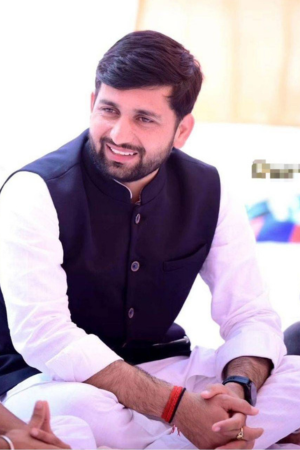
Shankar Lal Bishnoi
Shankar Lal Bishnoi, an environmental geographer, is a guest lecturer in the Department of Geography at Jai Narain Vyas University, Jodhpur. His academic work focuses on geography, environmental studies, sustainable social practices, and interdisciplinary research. Member of the Bishnoi community, he defended his doctoral thesis titled "The Role of the Bishnoi Community in Environmental Preservation: A Geographical Study with Particular Reference to Western Rajasthan." As part of AltLife, he will bring his theoretical and empirical expertise to understanding community realities on the ground, as well as support for fieldwork and logistics.
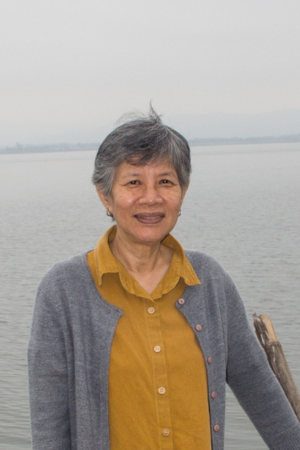
Kwanchewan Buadaeng
Kwanchewan Buadaeng is a lecturer in the Department of Sociology and Anthropology, Faculty of Social Sciences, at Chiang Mai University, Thailand. She received her PhD in anthropology from the University of Sydney (2001). Among her most recent works are "A Karen Charismatic Monk and Connectivity across the Thai-Myanmar Borderland," in Charismatic Monk of Lanna Buddhism, edited by Paul T. Cohen (NIAS Press, 2017), and "Christian Missions and the Reconstruction of Identities: The Talaku Karen on the Thailand-Myanmar Borderland" in Regional Identities in Southeast Asia: Contemporary Challenges, Historical Fractures, edited by Jayeel Cornelio and Volker Grabowsky (Silkworm Books, 2023).
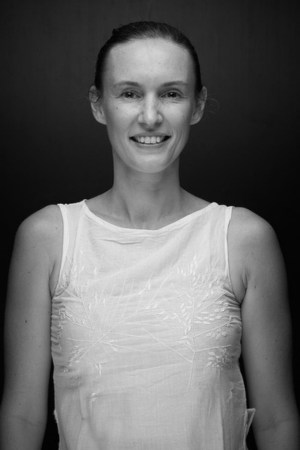
Suryamayi Clarence-Smith
Suryamayi Clarence-Smith is a university lecturer (currently at the California Institute of Integral Studies), an academic and action researcher, policy officer and community engagement consultant based in the intentional community Auroville, India, where she manages the Auroville Research Platform, dedicated to supporting research on Auroville. With a PhD in International Development from the University of Sussex, and a BA in interdisciplinary studies from the University of California, Berkeley, her expertise is in utopian and prefigurative practices and the development of alternative and sustainable societies. Amongst her publications is the monograph Prefiguring Utopia: The Auroville Experiment (Bristol University Press), and she will be contributing her theoretical and ethnographic expertise on Auroville to the AltLife project.
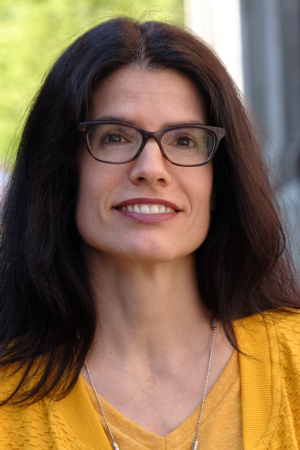
Esther Leemann
Esther Leemann is a social anthropologist and lecturer in the Department of Social Anthropology and Cultural Studies at the University of Zurich. She has more than 20 years of research experience in Central America and Southeast Asia, with work focused on political ecology, development, population displacement, land conflicts, indigenous peoples' rights, rural livelihoods, disaster management, post-disaster reconstruction, and housing. Her work focuses in particular on indigenous territoriality and land rights, including the displacement of the Bunong of Cambodia, as well as the broader implications of land dispossession, compensation, and conservation for affected communities.
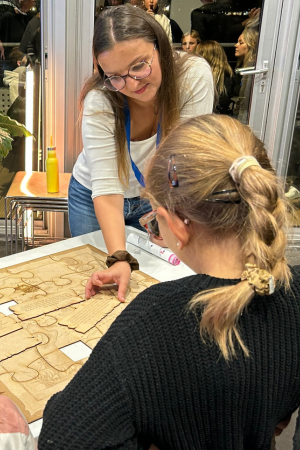
Léa Menard
Léa Menard is an assistant engineer in documentary and scientific resources (Bordeaux Montaigne University). She is responsible for public engagement with science at GeoDock, the outreach center of the CNRS research unit PASSAGES (UMR 5319). She supports the Alt-Life research project team in designing and facilitating the exhibition planned at GeoDock at the end of the project.