Research and Training Centre for Religio-cultural Community (RTRC)
Chiang Mai, Chiang Rai, Mae Hong Son · Northern ThailandKaren, Lahu, Lawa and Northern Thais
The Research and Training Centre for Religio-Cultural Community (RTRC) that was officially recognized in 1999, continues the work initiated by Thai Catholic actors in the north of the country in the 1970s. Established in Chiang Mai, RTRC advocates for a “religio-cultural” approach of development and of theology, that implies “traditions, local wisdom and experience of life.” For this purpose, people involved in RTRC founded the Asian School of Wisdom (ASW), which was inaugurated in 2021 and aims to be a place of encounter and training. These institutions were created and are still headed by the northern thai priest, Father Niphot Thianwihan. They express a critique of dominant development and aim to “encourage / empower local movements based on their [...] beliefs in guidance of nature, ancestral spirits and the Creator-Spirit.”
In terms of cultural and religious practices, the RTRC and the ASW therefore seek to promote interfaith dialogue between Catholicism (influenced by liberation theology) and local cultural practices, including animism.
The RTRC team consists of Father Niphot (a ‘senior staff member’), catechists and village chiefs. The Centre operates through ‘training of trainers’ and works with local people known as ‘organic intellectuals’.
Ath-Thaariq Quranic School
Java · IndonesiaFounded by Nissa Wargadipura
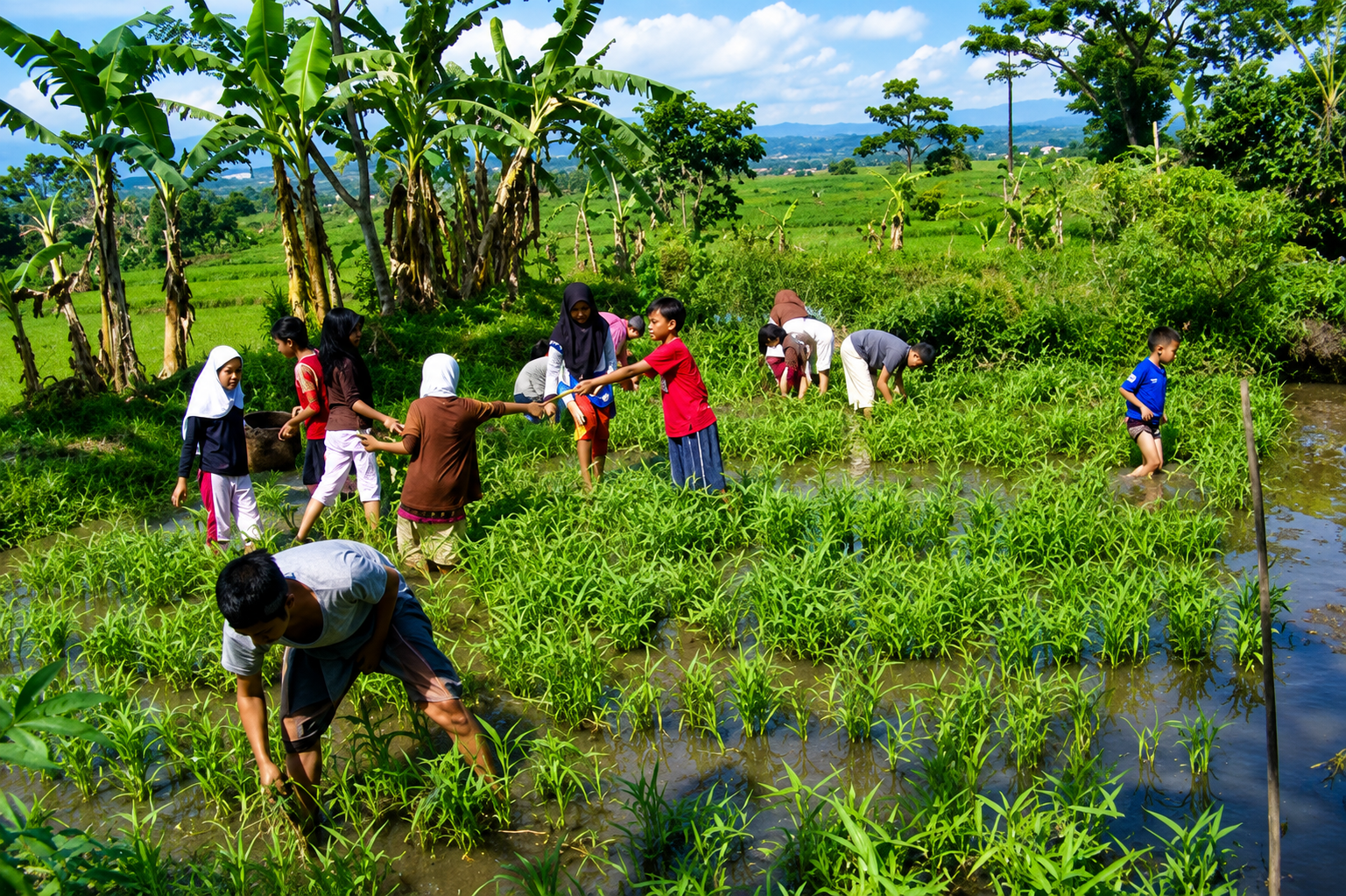
Ath-Thaariq Eco-Koranic School in West Java (Indonesia) was founded in 2008 by a female influential campaigner for small-scale farming. This religious education teacher valorises the precepts of Islam through agroecology. The school is part of the vast movement of environmentalist Islam in Indonesia, with variations ranging from Sufi mysticism to more sectarian Salafism. The disciples of the school come from rural milieu and don’t have any particular political background. However, the school is supported by outside intellectuals and activists, who may provide classes, many of whom come from the Institute for agricultural studies in Bogor (IPB, particularly the Sajogyo Institute), or from research-action foundations and NGOs. These outsiders not only articulate the local project with green Islam references, they also convey technical know-how.
As a state-registered institution, the school is led by the female religious teacher (ustadza), run by her children and with local links to the extended family, employing teachers and an administrator.
The school is part of a traditionalist Sunni Islamic tradition (open to local religious practices, including animism) and is engaged in interfaith dialogue.