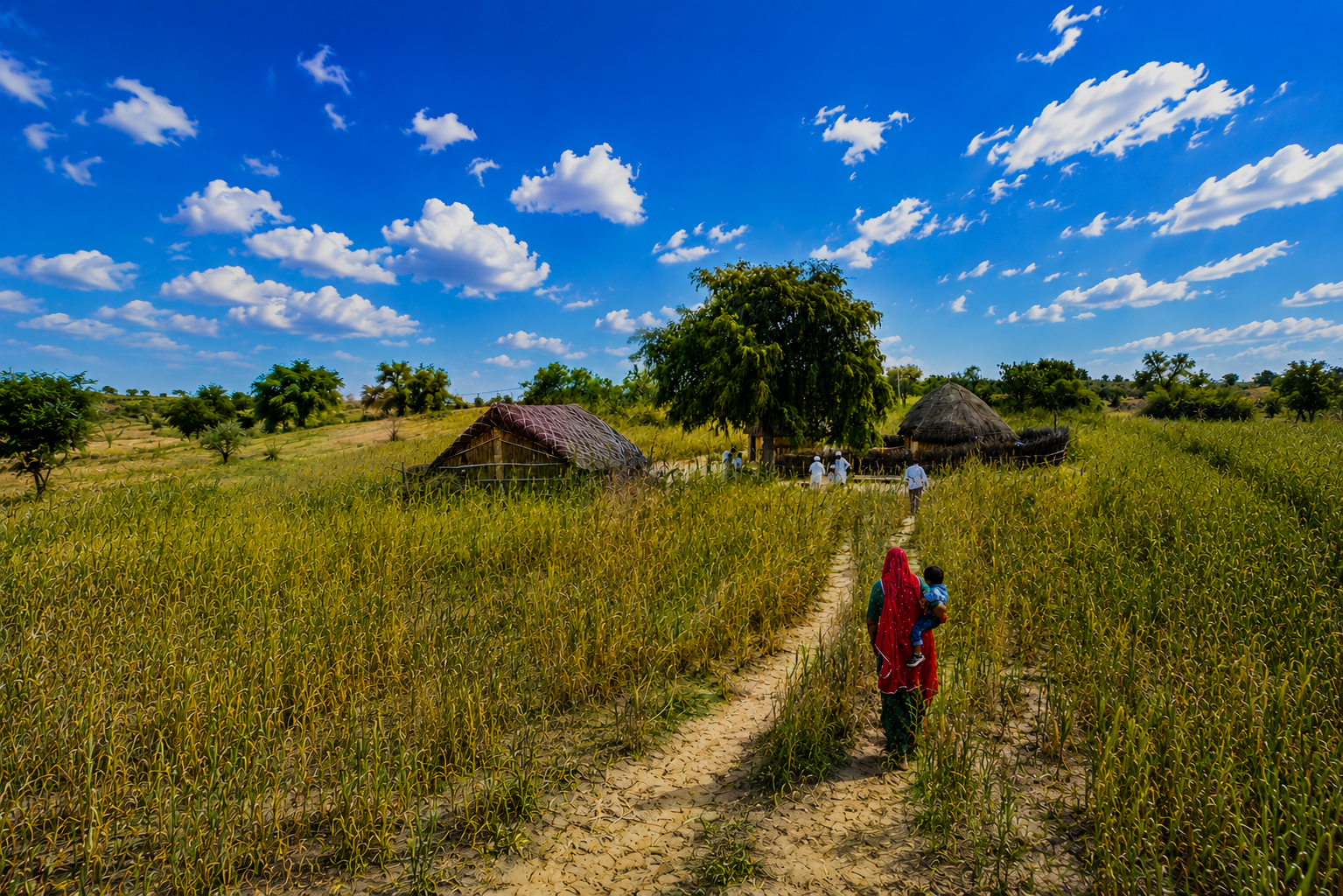
The Bishnoi Community
Rajasthan · North-West IndiaDistricts of Jodhpur, Bikaner, Nagaur, Phalodi
Founded by Sri Jambeshwar (1451–1536)
The Bishnois are what is known in India a sampradaya, a ‘religious community’.This community was formed by guru Sri Jambeshwar, whose teachings were transmitted and compiled into a book, the SabadVani, and is based on the observance of 29 precepts (the niyam), which are the origin of their ethnonym (bish: 20; noï: 9 in Marwari).
While being a Bishnoi depended on voluntary commitment at the community’s foundation, it is now determined by birth. However, the cohesion of the community’s social and religious project still depends on its members’ commitment to a way of life structured by these 29 rules. These mainly concern prescriptions relating to daily rituals and practices, fostering an ideal of purity on both a physical and psychological level, whereas several of them specifically codify relationships with animals and plants. Although today the Bishnois see their values and practices under threat from a whole range of socio-economic and ecological upheavals and challenges (changes in lifestyles, urbanisation of territories, expansion of intensive agricultural systems) respect for and observance of these niyam nevertheless remain at the heart of their identity and spiritual attachment.
The Akhil Bhartiya Bishnoi Maha Sabha (ABBMS), a national organization founded in 1936, brings together religious and political representatives charged with protecting the values and ethics of Bishnoism, maintaining temples, organizing major religious festivals, and discussing and ruling on societal issues affecting the community.
Bunong Indigenous Peoples Association
Mondulkiri Province · CambodiaFounded by PRAK Neth
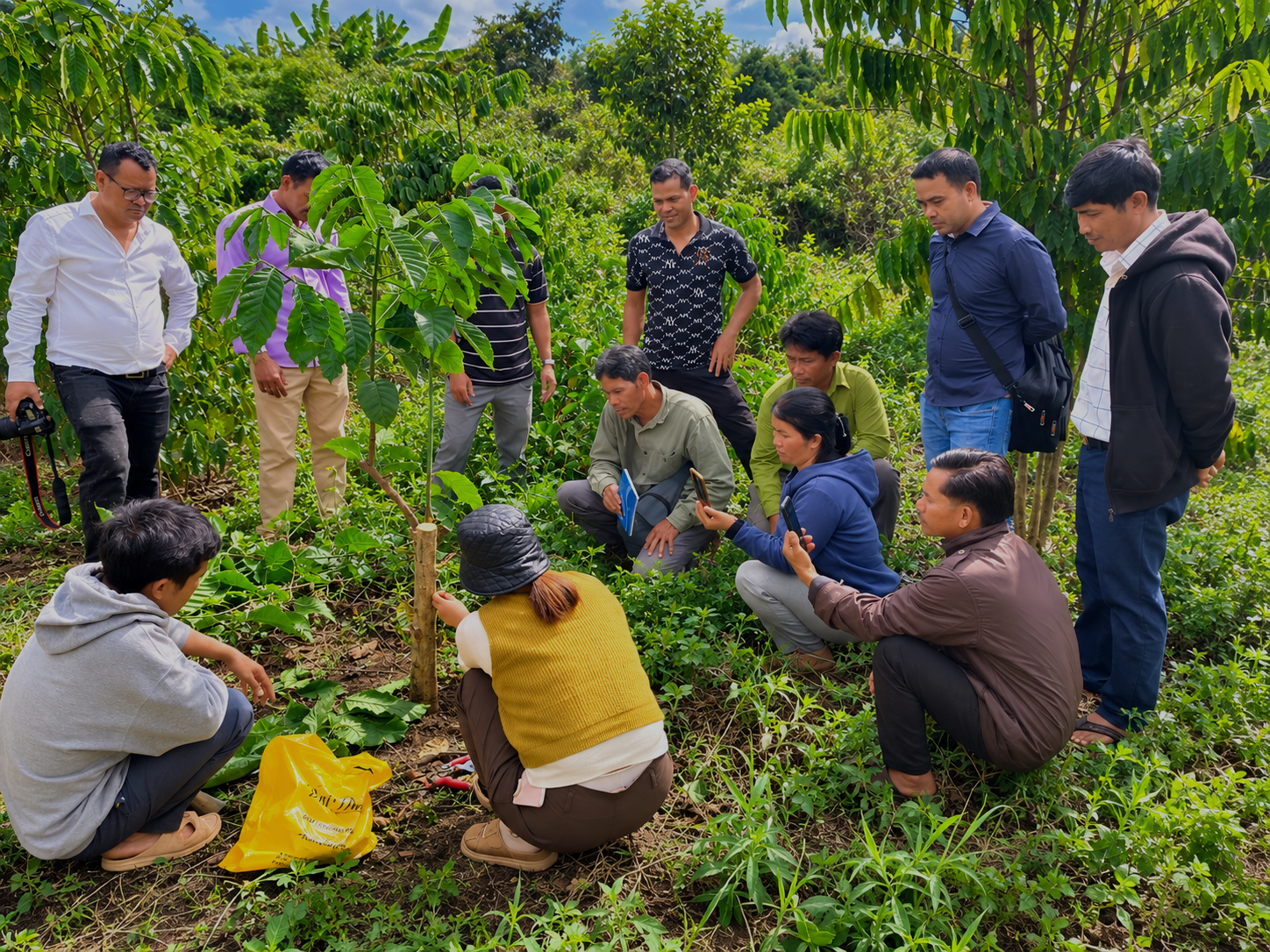
For the Bunong Indigenous People Association (BIPA) this involves working with their community to defend their land and forests against agro-industrial companies and to support other young Bunongs in continuing their education.
The BIPA gathers persons who identify as Bunong, one of Cambodia’s 24 officially recognized “indigenous minorities”. It is anchored in Mondulkiri province, where the ancestral lands of Cambodia’s Bunong are situated. BIPA was created by young educated Bunong and officially registered with the government as an association in 2016. Its aim is to get organised in the face of the rapid and violent development of the highlands, where spirit forests and family fields were destroyed to make way for commercial large-scale plantations. In a context in which land is too scarce to continue swidden farming in a sustainable way, one of its projects consists in accompanying local farmers in their transition to other forms of agriculture. This involves investing into commercial cultures, but with the will to absorb the market's shocks on the local scale.
The association is structured in accordance with the rules in force in Cambodia (director, executive committee, advisory committee), with a few employees (accountant, vet, agronomist, educator), volunteers and members.
Within BIPA there is the desire to foster mutual understanding among Bunong people with different spiritual practices: animism, Christianity (Catholicism, Protestantism), Buddhism
Kanekes Community
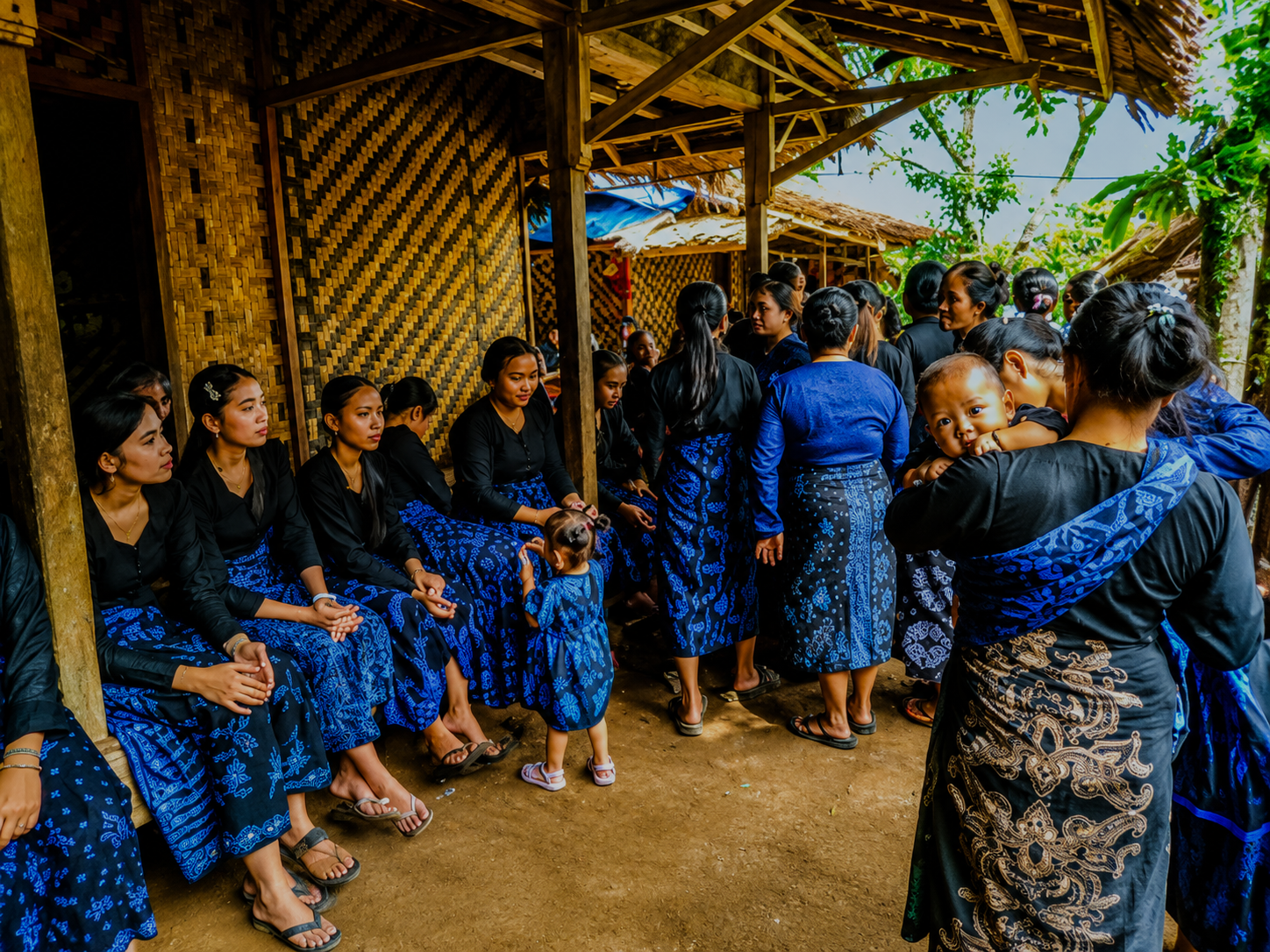
Java · IndonesiaThe Kanekes in Banten, Indonesia, are an “indigenous community” (masayarakat adat), composed of around 15,000 people (no official record). They live around Mount Kendeng and protect the springs that irrigate the plains of the region by practising slash-and-burn agriculture and carrying out rituals designed to maintain the socio-cosmic order.
Their social organisation is governed by strict rules relating to kinship, agroforestry, and technology (building, energy, cloth, etc.). Under demographic pressure and attracted by modern material promises, a segment of this mountain society finds support from outside Muslim foundations offering care, education and food resources. The families also employ strategies for settling on the outskirts of their traditional territory in order to balance traditional customs with access to modern conveniences.
The system of governance operates on a concentric organisational model, with religious and political representatives and administrative delegates at the periphery.
Cultural and religious practices combine animism with Islamic influences, centred around the supreme ancestor, the goddess of rice and invisible forces that protect the area.